
Overview

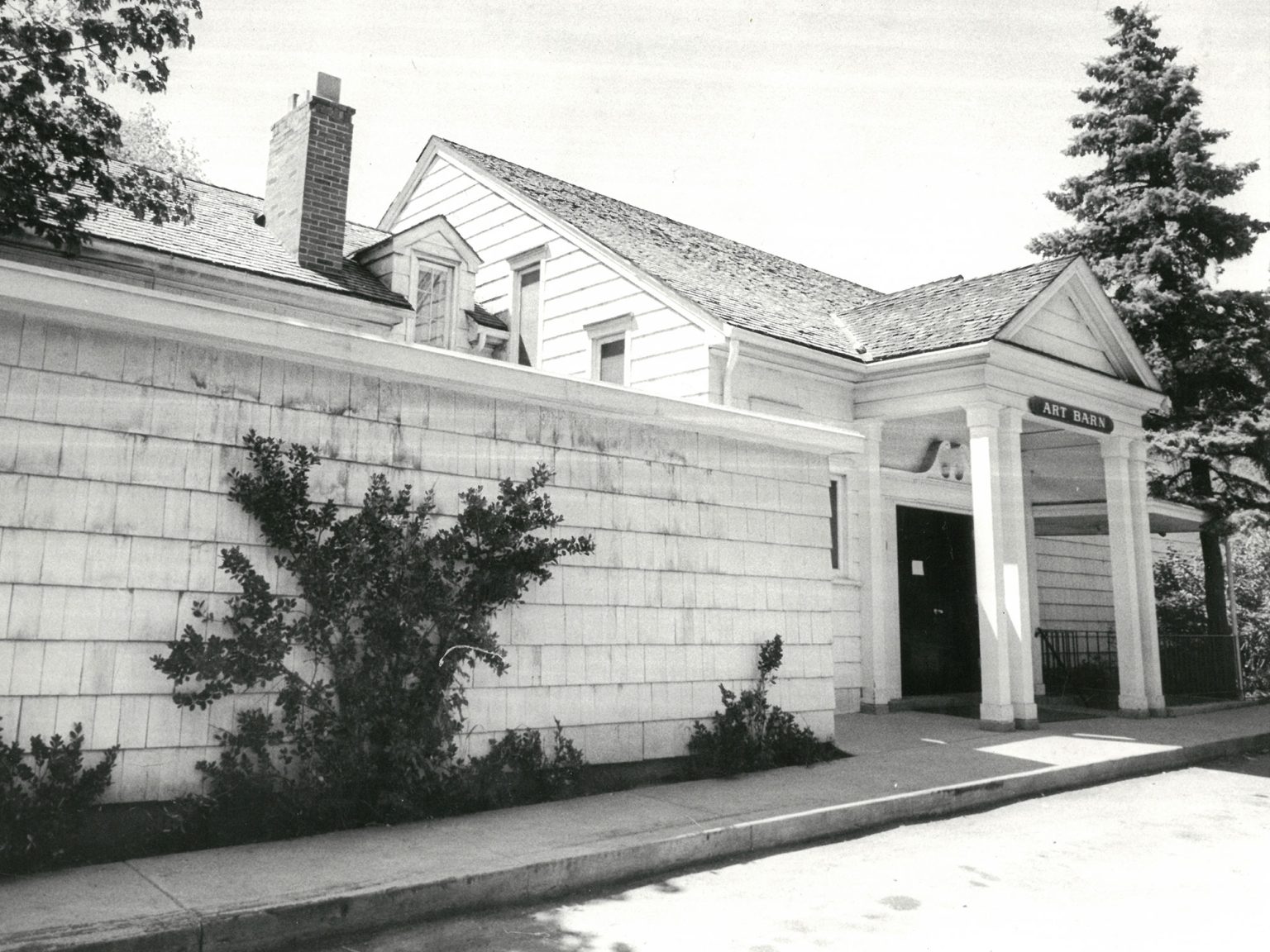
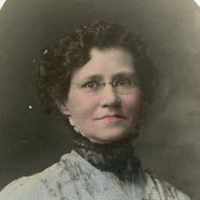
The Art Barn, a community center for the arts, started by Alta Rawlings Jensen with government funds and community support, became one of the state’s most enduring and influential cultural institutions. Alta’s concept for the Art Barn was inspired by her time spent in Carmel-by-the-Sea, California, where she saw how artists and writers all gather in one central place. Upon her return to Salt Lake City, Alta set out to gather the various parts Utah community, including artists, businessmen, and politicians, to support her vision. Despite the hardships of the Great Depression, she drummed up enthusiasm and donations for the community center, drawing on their shared heritage and love for community art, arguing that Utahns “still love art above our money and commercial interests.” Donations came from well-known local artists, including Mabel Frazer, Henri Moser, and B.F. Larsen; Salt Lake City, in the form of a land grant; the Church of Jesus Christ of Latter-day Saints, the Architect Woolley, who donated his services, and individual citizens of the Salt Lake Valley. The building’s cornerstone was laid on 7 December 1931 in Reservoir Park, Salt Lake City.

The Art Barn opened in the summer of 1933 with a retrospective exhibition of Utah Artists. The Art Barn became a vital cultural force in Utah, offering unprecedented opportunities for local visual artist to display their work in its galleries and to attend traveling exhibitions displaying national and international, traditional and avant-garde art. It also encouraged art lovers with all levels of education and skill to attend lectures and courses on a range of fine arts and crafts. This is seen in Alta’s founding credo, which states that the Art Barn would be “CENTRAL-BOHEMIAN—INFORMAL—SELF-SUPPORTING— Free and open afternoon and morning to the public as well as to artists and art lovers” and “PROFITABLE TO EVERYBODY.” A soon—to-be adopted clause added that it would be “an Art Center where Art may be expressed and sold yet not confined to one type of art— constituting a haven’ for the community. The Art Barn’s has endured for over 100 years, and subsequent iterations included the Salt Lake Art Center and the Utah Museum of Contemporary Art.
Major Moments

As one of the state’s most enduring and influential cultural venues, it is no surprise that the Art Barn opened in 1933 with a retrospective exhibition of Utah Artists. The Art Barn’s mission to promote local art and artists was realized as the institution aimed to always maintain a permanent exhibition of Utah artists. In the early years, this greatly benefited local painters like Joseph A. F. Everett, Rena Olsen, LeConte Stewart, and Edwin Evans, who were some of the Association’s first solo shows.

During Jensen’s tenure at its helm, the center hosted several key shows, including works on paper by the Society of Print Makers of California, and Old Master etchings from the prestigious Knoedler’s Gallery of New York, art from the Saturday Evening Post, and solo shows by Maynard Dixon and Millard Sheets. International exhibitions and artists included Ralph Helm Johonnot’s Asian-influenced art alongside 19th-century Japanese prints, works by Diego Rivera, and, later, a show including the works of Frida Kahlo, which was at the time called “the most important group of pictures ever exhibited in Salt Lake.”v

Importantly, Elisabeth Spalding, a Colorado watercolorist who studied in Europe, was the institution’s first solo exhibition by a woman artist.viOther women to hold individual shows during Alta’s time include watercolorists Rena Olse, Lois head, and Verlla Birell, printmaker Olive Fell, and “prominent woman master craftsman” Märta af Ekenstam.vii

Legacy

The Art Bar became so successful that it attracted national attention, providing a model for the community art centers that proliferated around the country during the late 1920s.viiiPart of the Art Barn’s success was due to its openness. Previous attempts to establish art organizations and clubs in Utah had not been as successful because they were limited in scope, focusing on one art form or restricting membership. The Art Barn was a place of community for all. Alta also recognized that the future of Utah art rested with the younger generations and made it clear that the Art Barn association intended to support students and emerging artists.

However, they also promoted women artists, which became one of Alta’s important legacies and an important commitment kept by the association in its subsequent iterations. The Art Barn’s dedication to promoting the work of women artists stands as an important maker of its progressivism.

The Art Barn’s progressive nature was instilled in its early years when, in April 1934, a nude painting in the Art Barn’s exhibit of the California Watercolor Society generated a public outcry. The painting in question, by Arnold Franz Brasz, the President of the California Watercolor Society, depicted not one but two nudes— one female and one male. Although the worked veered into allegory, a genre in the western tradition that had long embraced nudity in representation, is also possessed enough realism to make some viewers distinctly uneasy, in not outright offended. Alta hosted a meeting, inviting people from diverse backgrounds, and with a range of perspectives, to discuss nudity in art. They likewise debated the matter of “modernistic art.” The controversy seems to have further emboldened the Salt Lake arts center to encourage

“modernistic art” executed in progressive and experimental styles. Thus, the Art Barn created a culture of openness and acceptance towards the new and unfamiliar.

The Association has endured, becoming the Salt Lake Art Center in 1958 and later, the Utah Museum of Contemporary Art in 2011. To this day, this almost one-hundred-year-old organization remains committed to its original mission of providing Utah citizens, free of charge, with a host of opportunities to deepen their engagement with the visual arts and become more acquainted with a variety of stylistic and conceptual approaches.ix

Bibliography

This biography is adapted from Heather Belnap’s “How Far Can Art Go in Utah?”: The Progressivism of the Art Barn’s Alta Rawlins Jensen. Utah Historical Quarterly 1 October 2023; 91 (4): 284–301. doi: https://doi.org/10.5406/26428652.91.4.03